Producer's Program MFA
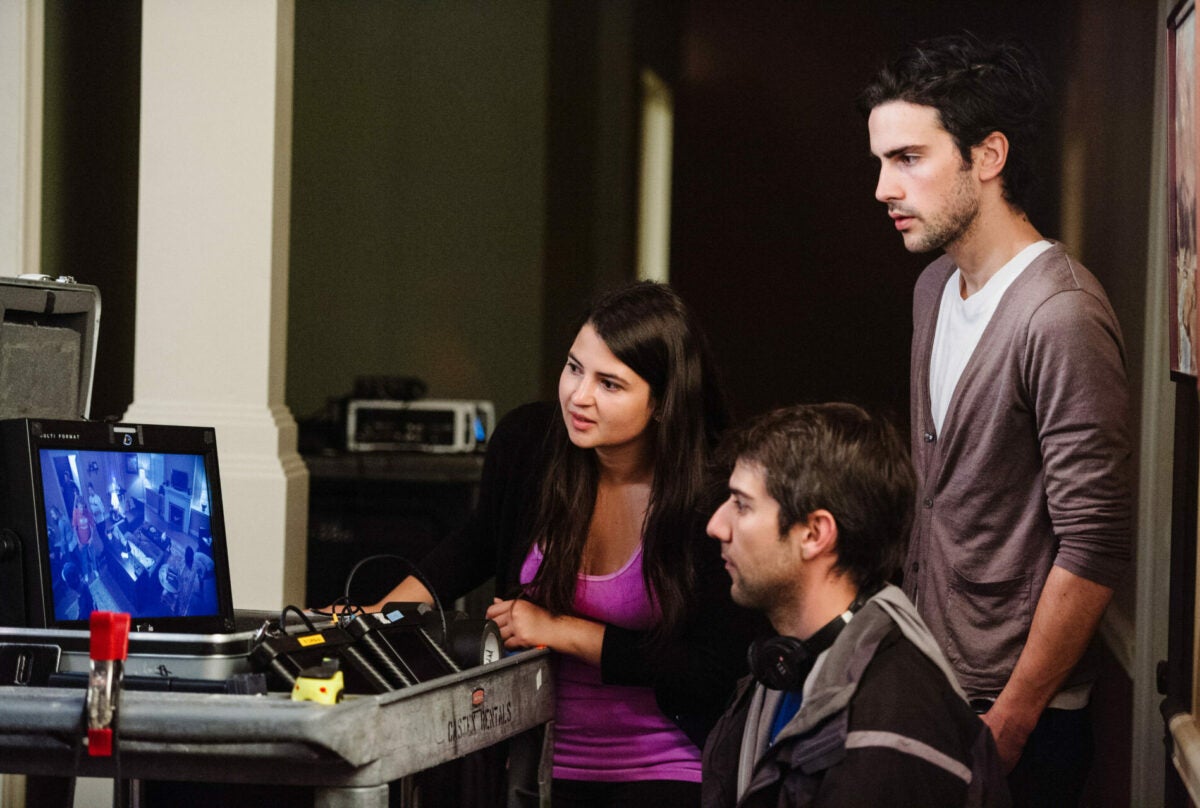
The UCLA Producers Program was first established in 1984. It offers a highly individualized two-year Master of Fine Arts degree program designed for creative people who wish to pursue careers as creative producers or executives in the entertainment industry. To accomplish these goals, the Program and all the courses in it are essentially courses in strategy, since the ability to think strategically is one of the primary skills of the creative producer.
The prevalent philosophy of UCLA's Department of Film, TV, and Digital Media has long stressed the art of storytelling, and the Producers Program is no different. Our unique emphasis on development and strategy as the most fundamental skills of the creative producer and personalized mentorship as the guiding educational principle set us apart in the world of film school education. In addition, our students are trained in the fundamentals of contract law and business negotiations; international financing; the art of pitching; production management; marketing; studio and network management; talent representation; and distribution and exhibition.
The instructional focus of the Program is on feature film and television; however, we always expand our curricular offerings to address new and emerging media. Moreover, our emphasis on development and strategy provides graduates with a skill set that is transferable to any medium. In keeping with the entrepreneurial nature of the producer, we actively encourage our students to explore and consider non-traditional and emerging media, be it internet and digital media distribution, video games, mobile device entertainment, or branded sports and event management, as viable career options and business opportunities.
Our Head
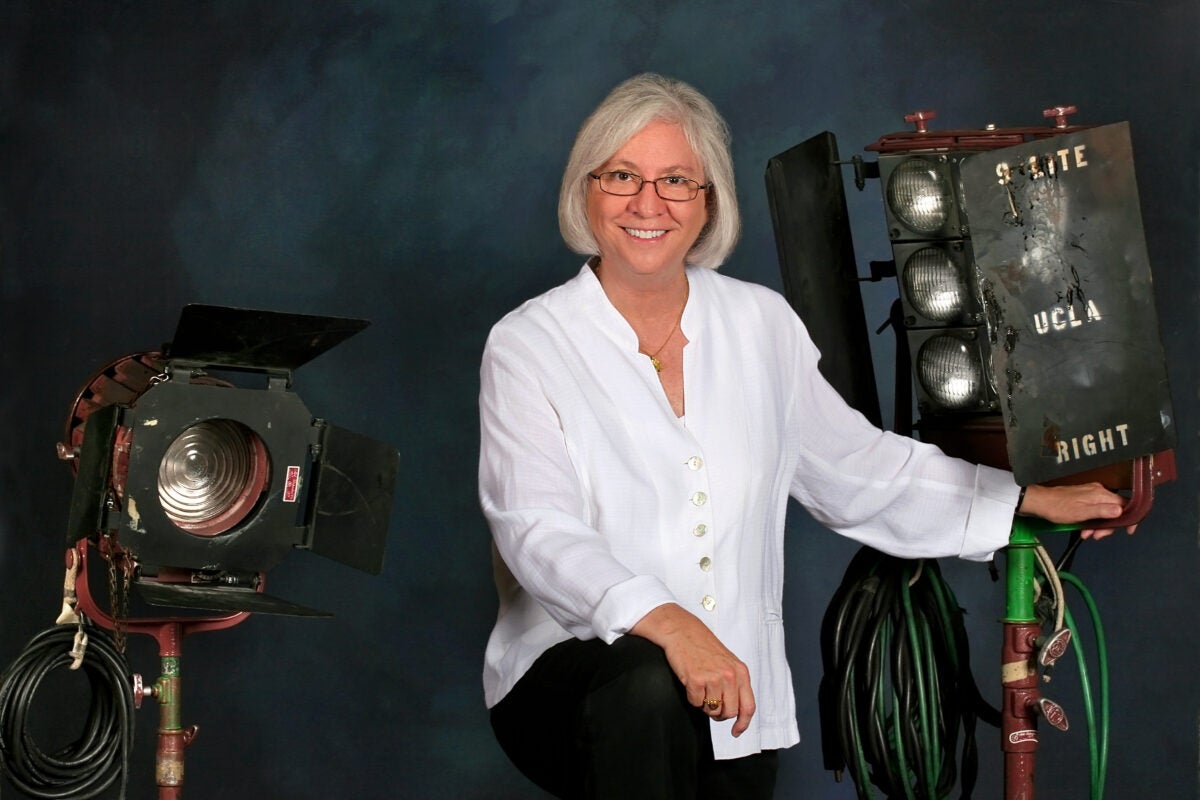
Denise Mann, Associate Professor and head of the UCLA Producers Program, teaches graduate and undergraduate courses on contemporary entertainment industry practices as well as critical studies seminars on film and television history and theory.
Professor Mann routinely delivers talks at scholarly conferences and delivers industry talks at international film festivals and conferences such as the Tokyo International Film Festival and Shanghai International Film Festival and at major universities in Asia and Europe, including the Beijing Broadcasting Institute, Shanghai University, Paris 1 Pantheon Sorbonne and Institut National de L'Audiovisuel (INA). She serves as a consultant to Creek and River Co., a media management firm in Tokyo, and serves on the board of the Association Internationale des Medias (AIM) in Paris.
Her book, The New Hollywood Independents – When Talent Became Management, is forthcoming (University of Minnesota Press). Professor Mann co-edited Private Screenings: Television and the Female Consumer, (University of Minnesota Press, 1992) and has published articles on film, television and consumer culture in a range of journals. Professor Mann served as an associate editor on Camera Obscura, a journal of feminism and film theory, for six years (1986-1992).
Our Students
Our students are driven to succeed. They stand out given their creative passion and their business acumen. They are self-starters and understand that every good piece of entertainment starts with the script.
In addition, the typical UCLA Producers Program student reflects the cultural diversity of the international and national filmmaking community and includes many women, minorities and students from abroad. The typical student enters the Program with the requisite entrepreneurial skills of a producer. They typically have interned at studios, agencies or in production companies; optioned material and are working with screenwriters; produced several shorts or low-budget features; or worked in some capacity in the entertainment industry such as development, marketing, talent representation, law, or line producing. Most come to the Program in order to gain a comprehensive understanding of all aspects of the film and television industries from working professionals so they can apply these principles to their own projects.
It is the expressed goal of the UCLA Producers Program to train both independent producers and studio or network executives. One of the distinct advantages of having producing students pursue separate career tracks is that young producers as "sellers" have immediate access to a group of peers who have become development executives working for "buyers."
Our Faculty and Curriculum
The UCLA Producers Program faculty is comprised of distinguished academics and internationally recognized professionals in the fields of film, television, and new media. They are industry leaders in their chosen fields and include studio chiefs, Oscar-winning producers and box-office grossers, top agents and lawyers, as well as internationally renowned film and television scholars.
Our Advisory Boards
The UCLA Producers Program Advisory Board and Legal Advisory Board consist of industry professionals who lend their time and expertise, serving as advisors to Professor Mann and the other full-time members of the Producers Program faculty and administration. The co-heads of the Advisory Board are Arnold Rifkin and Tom Sherak. The members are notable producers and executives: Donald De Line, Denise Di Novi, Lindsay Doran, David Hoberman, Tom Jacobson, Anne Kopelson, Kevin Messick, and Jennifer Perini.
The Legal Advisory Board members are entertainment attorneys who teach in the Program and include: Eric Baum, Steve Fayne, Alan Friel, and Ken Suddleson.
Mentors
Mentors fulfill a very important and essential role in helping students transition from the academic to the professional world. Assigned to students at the end of their first year, mentors are established producers and executives who advise and mentor UCLA Producers Program students in one-on-one sessions on their thesis projects as well as career choices. Current mentors include: David Blackman, Effie T. Brown, Lindsay Doran, Cassian Elwes, Marianne Maddalena, Frank Marshall, Mike Medavoy, Rena Renson, Peter Rice, Charles Roven, Richard Sakai, Stacey Sher, Lauren Shuler Donner, Nick Wechsler, and Rebecca Yeldham.
History of the Program
The founding co-chairs of the UCLA Producers Program are Howard Suber, who has taught some 65 different film courses at UCLA during the past 42 years, and Peter Guber, Chairman of Mandalay Entertainment, who has produced such films as Donnie Brasco, Batman, Rainman, Gorillas in the Mist, The Color Purple, and Midnight Express.
Rankings
The UCLA Department of Film, Television, and Digital Media is among the nation's top ranking film schools. The UCLA Producers Program is one of only a few programs in the world designed to train the next generation of film producers. The Producers Program is a highly selective, individually tailored, professional two-year program, accepting less than 10 percent of those who apply. There are 27 Masters of Fine Arts students currently enrolled.
II. Summary:
The Producers Program has the following time-to-degree requirement: a minimum of six quarters; maximum of nine quarters. The minimum total units required to graduate is 72 units (18 courses); however, the typical Producers Program student enrolls in 100-120 units (25-30 courses) to complete all required and core courses. Only 16 units of FTVDM 596ABC may be applied towards the total course requirement and only 8 of these may be applied towards the minimum graduate course requirement. Only 4 units of 596A and 4 units of 596B may be taken prior to advancement. FTVDM 596 D though F may be taken after advancement.
III. Required Courses:
A list of all required courses in sections A through D.
A. Required Producers Program Courses:
FIRST YEAR CURRICULUM:
- 247 Creative Producing Winter
- 287AB&C Introduction to the Art & Business of Producing 1-3
- 288A&B Feature Film Development 1-2
- 291A, B and/or C Feature Film Production, Marketing & Distribution (at least two courses)
- 292ABC Network Television & Emerging Platforms (at least two courses)
- 294AB Contracts & Negotiations (at least one course)
- 298A Contemporary Media Franchises
- 418 Creative Producing on Set
- 208A Film Structure
- 289A or B Current Business Practices in Film and Television: Strategy; Independent Spirit (at least one section)
- 290AB&C Research & Development 1-3
- 294C International Financing & Distribution
- 295A, B and/or C Identifying Your Assets; Advanced Producing 1 & 2 (at least one section)
- 296A or B Talent Representation (at least one section)
- 201 Media Industries and Cultures of Production
- 202 Media Audiences and Cultures of Consumption
- 203 Film and the Other Arts
- 204 Visual Analysis
- 206A European Film History
- 206B Selected Topics in American Film History
- 206C** American Film History
- 206D Silent Films
- 207 Experimental Film
- 208B** Classical Film Theory
- 208C Contemporary Film Theory
- 209A Documentary Film
- 209B Fictional Film
- 209D Animated Films
- 217A American Television History
- 217B Selected Topics in Television History
- 218 Culture, Media and Society
- 219 Film and Society
- 220 TV & Society
- 221 Film Authors
- 222 Film Genres
- 223 Visual Perception
- 224 Computer Applications for Film Study
- 225 Videogame Theory
- 246 Electronic Culture
- 270 Film Criticism
- 271 Television Culture
- 276 Non-Western Film
- 277 Narrative Studies
- 298AB Special Studies (select classes must see Graduate Counselor)
- 188B Introduction to the Art & Technique of Filmmaking
- 188D Film Editing: Overview of History, Technique and Practice
- 400 Film Image Design Lab
- 403A Advanced Documentary Workshop
- 130 Screenwriting Fundamentals
- 431 Introduction to Screenwriting
- 434 Advanced Screenwriting
- 181A Introduction to Animation
- 181B Writing for Animation
- 181C Animation Workshop
- 283A Introduction to Television Development
- 284A Advanced Television Development
- Theater C446A
- Art and Process of Entertainment Design
SECOND YEAR CURRICULUM:
B. Required Cinema & Media Studies Courses:
Students have to take a minimum of TWO graduate-level Cinema & Media Studies courses.Please see list below for approved course numbers and titles.
Please note that not all courses are offered every quarter. Students should consult the registrars schedule for available courses and class times. For courses in the 298 series, which is a temporary course number, students should consult the graduate advisor first to check whether a course fulfills the CMS requirement.
**These courses are sometimes taught as a core course for M.A. students and may not be available that particular quarter for MFA students.
C. MFA Course Requirement:
Students have to take a minimum of ONE graduate-level course from the Directing/Production, Animation, and/or Screenwriting area. Please see attached list for approved course numbers and titles.Directing:
Screenwriting:
Animation:
If no MFA courses are available during the students residency in the Program, FTV 208A may be used to fulfill the above requirement.
D. Internship Requirement:
Students have to commit a minimum of THREE quarters to interning in an entertainment company and enroll in FTV 498 for those quarters during time in the Producers Program.
IV. Electives Courses:
a. Showrunner Concentration:
Students interested in the writer-producer concentration (Showrunner Concentration) must submit an audition paper and commit to complete all courses in the two-year concentration. For more information on the track please see Showrunner Concentration website/document.
b. Television Producing Courses:
Students may choose any of the electives below. No audition paper required, but limited enrollment on a first-come, first-served basis.
c. Theater Department:
Some limited enrollment in certain Playwriting or Design courses may be available, depending on students prior experience in those areas. Interested students should contact those instructors directly for more information.
For undergraduate courses in Theater, please see attached list.
d. Anderson School of Business:
Students should contact Ben Harris on available courses before the beginning of each quarter.
All Theater, Film and Television degree programs are full-time only. We only accept students for the Fall Quarter. This admissions information is for Fall Quarter 2013.
THE GRE IS NOT REQUIRED FOR MFA APPLICANTS
Your Checklist
Notice for applicants affected by Hurricane Sandy: If the storm and its resulting closures affected your ability to submit your application by the November 1st, 2012 deadline, please email filmgrad@tft.ucla.edu an explanation of your situation, including where you live. Deadline extensions will be provided based on your current situation.
- Apply online to UCLA Graduate Division by November 1, 2012.
- Departmental application instructions. Print and complete the Departmental application. Choose MFA – Producer's Program. Please submit by mail.
- Complete and submit the following supplemental information. All written Supporting Material must be typed and on 8-1/2 by 11 paper with at least a 12-point font. The lengths indicated are the maximum allowed. Make sure your name is on each page and that all pages of each section are stapled together.
- A portfolio consisting of two treatments (3 pages each). Choose between a Feature Film and/or Television Treatment.
- Feature Film Treatment may include: title, logline, genre, and story synopsis
- Television Treatment may include: title, logline, genre, premise, short character description of major characters, and a brief synopsis of pilot episode
- Please do not send scripts, DVDs or tapes.
- Please submit hard copies of the uploaded documents by mail.
- Two official transcripts from all undergraduate and graduate work are required. NOTE: Community college transcripts are not necessary, as the coursework will be reflected on your undergraduate transcript. Please have transcripts sent to address below or include sealed envelope in application packet.
- Statement of Purpose. A 1-2 page document giving the faculty a sense of who you are. What do you hope to achieve by participating in the program? What are your professional goals? How do you plan to achieve them? Please submit a hard copy of the uploaded document by mail.
- Three Letters of Recommendation. Please enter the names and other information about your recommenders in the online Graduate Division Application. Letters may be submitted electronically or by mail.
- A Resume Please submit a hard copy of the uploaded document by mail.
International applicants
- Whose first language is not English, official test results from the Test of English as a Foreign Language (TOEFL) or the International English Language Testing System (IELTS) IS REQUIRED unless,
- the applicant who holds a bachelor's or higher degree from a university located in the United States or in another country in which English is both the primary spoken language and the medium of instruction, or who have completed at least two years of full-time study at such an institution, are exempted from both the TOEFL/IELTS requirement and the ESLPE. Please be sure to include such information in your application.
- TOEFL UCLA institution code – 4837 / Department code – 83. The overall minimum TOTAL score required is 87. For more information about UCLA TOEFL requirements, click here.
- Required Academic Records – Please click the link for UCLA Graduate Division requirements.http://www.gdnet.ucla.edu/gasaa/admissions/ACADRECS.HTM. ORIGINAL or CERTIFIED COPIES OF ALL ACADEMIC RECORDS IN ENGLISH AND NATIVE LANGUAGE ARE REQUIRED. This includes transcripts, diploma, and degree certificate. The degree conferral dates must be noted on the documents
Please send all items designated by mail to:
Graduate Film Counselor
UCLA Department of Film, Television and Digital Media
103 E. Melnitz, Box 951622
Los Angeles, CA 90095-1622
Application postmark deadline: November 1, 2012
For U.S. Citizens and Permanent Residents interested in receiving financial aid, note that the Fellowship Application and Financial Aid Application (FAFSA) deadline for UCLA is March 2, 2013. Applicants must complete the FAFSA by this date if they want to be eligible for all awards, work-study, and fellowships that UCLA offers.
Please visit our FAQ page for if you have additional questions
For Prospective Students:
- E-mail: filmgrad@tft.ucla.edu
- Phone: 310-206-8441
- Office: 103 East Melnitz Hall
For Current Students:
Film, Television & Digital Media Counselor: Cheri Smith