Animation MFA

  About
Courses
  Apply
Staff

Application postmark deadline: February 1, 2012

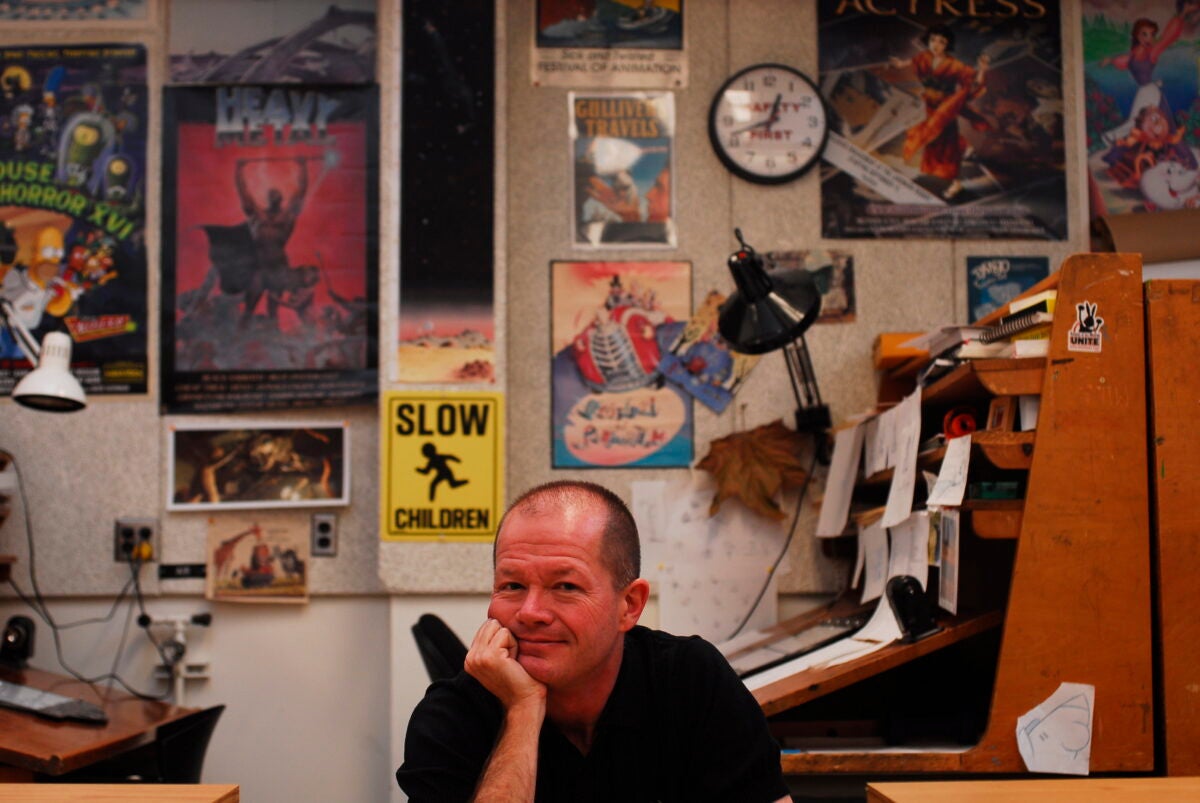
The UCLA Animation Workshop has been turning out innovative and accomplished artists for over half a century, never more so than in the past decade, as the popularity and commercial impact of the genre has exploded. The secret seems to be striking a perfect balance between technology and creativity. Although the Workshop has always acknowledged the importance of staying abreast of the latest hardware and software, its central emphasis has always been originality. The rule of thumb has guided the program since it was founded in 1948: "one person, one film." Students learn every phase of the filmmaking process, from scriptwriting to editing. They become masters of a demanding craft who are also master storytellers.

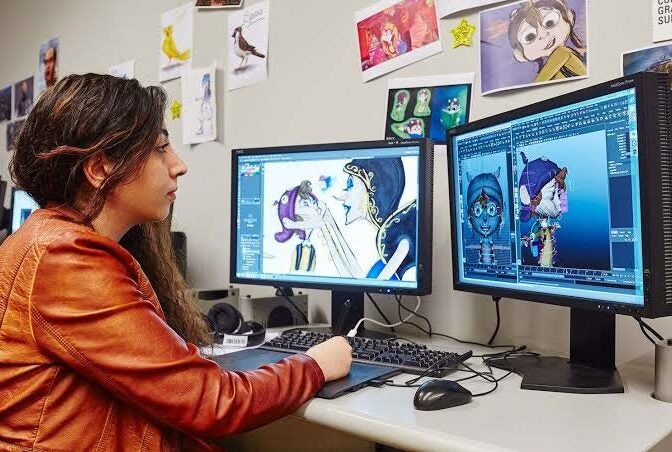
It is not surprising that Workshop graduates have been well-prepared for the CG innovations that have transformed the field of animation: established by gifts amounting to almost a million dollars from the Walter Lantz Foundation, the program's Walter Lantz Digital Animation Studio is a state of the art facility, a matchless resource for instruction, research and student film production.

And alumni such as Gil Kenan MFA '02 was nominated for Best Animated Feature last year for his directorial debut with Monster House, David Silverman '79, MFA '83, one of The Simpsons defining directors who brought The Simpsons Movie to the big screen in 2007, and Oscar-nominated Shane Acker '04, who expanded his visionary short film 9 into a feature film for producer Tim Burton — these Workshop pros are able to use the technology with freedom and expressiveness.

"One person, one film" means freeing the imaginations of artists by training them to control the entire process of making movies.

I. Area: MFA Animation (See sections I to V for all requirements)

II. Summary:

Minimum 6 quarters graduate residence in the Department; maximum 12 quarters residence. Minimum total of 72 units (18 classes) for the degree. At least 5 Graduate numbered courses (200,400,500 Level). Minimum course load is 12 units per quarter

Maintenance of a B average GPA.

III. Courses:

Required Courses

  • 181A Animation Design
  • 1818 Writing for Animation
  • 181C Animation Workshop
  • 484AB Visual Thinking and Organization for Animation (drawing)
  • 488A Interactive Animation
  • 489AB Computer Animation for Film and Video
  • or
  • 483AB Advanced Computer Animation Maya

FTVDM Required Courses

Two Film and Television Graduate Seminars

  • 209D Seminar in the Animated Film

Plus choose one below:

  • 203 Film and Other Arts
  • 206A European Film History
  • 206C American Film History**
  • 207 Experimental Film
  • 208B Classical Film Theory**
  • 208C Contemporary Film Theory
  • 209D Animated Film
  • 217 Television History**
  • 218 Culture, Media and Society
  • 219 Film and Society
  • 220 Television and Society
  • 221 Film Authors
  • 222 Film Genres
  • 223 Visual Perception
  • 270 Film Criticism
  • 271 Television Criticism
  • 276 Non Western Film
  • 277 Narrative Studies

** courses are sometimes taught as a core course for MA students and may not be available that particular quarter to MFA students. One Live Action Course

  • 150 Cinematography
  • 483AB Intro to Experimental Film

Or another approved course from the Production area (Directing).

Electives

  • 152 Film and Television Sound Recording
  • 188A Real Time Animation: Puppetry Arts
  • 188N History of Animation in America
  • 188J The Disney Feature: Then and Now
  • 480 Animation Timing
  • 482B Advanced Animation (Character Animation)
  • 482B Advanced Animation (Writing for the Animated TV Series)
  • 485 Legal Issues in Animation
  • 488B Advanced Animation (Layout)

This list is subject to change. Availability of courses is not guaranteed. Do not wait until your last quarter to fulfill requirements

To graduate an animation student will need to have finished:

One traditional film (181C)

One computer film (483ABC or 489ABA)

One interactive project (488A or B)

And one thesis film (596) if needed

IV. Courses by Year:

FIRST YEAR Traditional Animation

FALL

  • FT 181A Introduction to Animation
  • FT 181B Writing for Animation
  • FT 484A Visual Thinking and Organization for Animation (Drawing)

Electives if you have the time:

  • FT 488B Advanced Animation (Layout)

If you have completed 181ABC and have finished your first film as an undergraduate you can start as a second year student, but you will need to take the Seminar during the winter quarter.

WINTER

  • FT 181C Animation Workshop
  • FT 484B Visual Thinking and Organization for Animation
  • FT 209D Seminar in the Animated Film

Extra electives if you have the time:

  • FT 482B Advanced Animation (Character Animation)
  • FT 480B Timing (or FTV 485 Legal Issues in Animation)
  • FT 152 Film and Television Sound Recording
  • Falling Lizard Weekend, a traditional event of the workshop, will take place the weekend of the Super Bowl (and The Annie Awards) Feb 5,6,7

    SPRING

    • 181C Animation Workshop

    Extra electives if you have time:

    • 188N History of Animation in America
    Note: This undergraduate course, like all animation courses, is open to every student in the University, but in this case pre enrolls it alternates. Every other year, with FT 188J The Disney Feature Then and Now.

    • FT 152 Film and Television Sound Recording

    SECOND YEAR: Computer Animation

    Note: you can automatically take the computer class only if you have finished your 181C film by the end of summer. If not, admission to the computer courses will be on a case by case basis and you may have to wait until your third year (with a finished 181C film) before you can enroll in the computer courses.

    There are three options for the computer flight (1) 483ABC Maya, (2) 489ABA, or (3) Some combination of 483 and 489 but you must have a completed computer film finished to complete the computer animation requirement. All students must take 489A in the Fall Quarter even if they are taking 483A.

    The required courses outside of animation (one approved directing course and one approved media studies graduate seminar) can be taken any quarter.

    FALL

    • FT 483A Advanced Computer Animation Maya
    • FT 484A Visual Thinking and Organization for Animation
    • FT 489A Computer Animation
    • FT 488B Advanced Animation (Layout)

    Extra electives if you have time:

    • FT 488A: Interactive Animation is required in 3rd year but may take it in 2nd year if you have enough computer experience and are not enrolled in 483A (Maya)
    • FT 152 Film and Television Sound Recording

    WINTER

    • 483AB Advanced Computer Animation Maya
    • 489B Computer Animation Maya
    • 484B Visual Thinking and Organization for Animation (Drawing)

    Electives:

    • FT 482B Advanced Animation (Character Animation)
    • FT 482B Interactive Animation
    • FT 480 Timing

    SPRING

    • FT 483C Advanced Computer Animation Maya (may also take 489A)
    • FT 489A Computer animation (required if you are not taking the Maya class)

    Electives:

    • FT 482B Advanced Animation: Writing for the TV Series
    • FT 182N History of Animation in America
    Note: This undergraduate course, like all animation courses, is open to every student in the University (but in this case pre enrolls) it alternates. Every other year, with FT 188J The Disney Feature Then and Now
    • FT 152 Film and Television Sound Recording

    THIRD YEAR (Thesis)

    FALL

    • FT 488A Interactive Animation
    • FT 484A Visual Thinking and Organization for Animation (Drawing)

    Elective/required course(s)

    • FT 596 Thesis
    • You should be finishing your required animation courses by now. With a completed project in: Traditional Animation, Interactive Animation, and Computer Animation. Your thesis project can be in traditional, animation narrative, experimental, any content or style for any idea, for any purpose. It is your film and purpose and should be good. This is the year of your thesis film.

    You can go on a leave of absence if you like.

    WINTER

    • FT 488B Interactive Animation
    • FT 596 Thesis

    SPRING

    • FT 596 Thesis

    Elective/required course(s)

    • FT 482B Advanced Animation: Writing for the TV Series

    Leave of Absence

    REQUIRED NON ANIMATION COURSES

    One graduate seminar from the approved list of the Cinema Media Studies area

    One approved course from the Production area (Directing)

    SUGGESTED ELECTIVE COURSES

    Drawing: Character animators should be drawing all the time. The Union and others have classes.

    Editing: Especially for those without any film background - the language of film.

    Acting: For those into character animation, remember you are the actor or actress.

    Sound: Designing, mixing and using sound creatively - sound can make your film.

    Camera/Lighting: Especially for the lighting of 3D computer and puppet animation.

    And any of these: Design film, Computer programming, Directing, Movement, Painting,

    Perspective, Design, Color, Mythology, Life, and Love. We have a library of books, tapes, laser disks, DVD's you will need to read, look, analyze and learn from these to be a good filmmaker of animation. Internships are available and are helpful, especially if you know what you want to do also there is freelance work available. Both take time away from your education, a once in a lifetime opportunity.

The School of Theater, Film and Television only accepts applications once a year for the Fall Quarter. The Fall 2012 application period has ended, and you cannot apply for Fall 2013 until mid-September 2012. Please come back to this page in September 2012 to check the steps for applying for Fall 2013. Steps for applying for Fall 2012 are listed below as a guideline of past steps and materials we expect from applicants.

All Theater, Film and Television degree programs are full-time only. We only accept students for the Fall Quarter. This admissions information is for Fall Quarter 2012. 

THE GRE IS NOT REQUIRED FOR MFA APPLICANTS

Your Checklist

  • Apply online to UCLA Graduate Division by February 1, 2012.

  • Departmental application instructions. Print and complete the Departmental application. Choose MFA – Animation. Please submit by mail.

  • Complete and submit the following supplemental information. All written Supporting Material must be typed and on 8-1/2 by 11 paper with at least a 12-point font. The lengths indicated are the maximum allowed. Make sure your name is on each page and that all pages of each section are stapled together.

  • A description of an animation project, in storyboard form, that might be undertaken during graduate residence at UCLA. Other creative work may be submitted. Click here for more information about the portfolio. Please submit by mail.

  • Two official transcripts from all undergraduate and graduate work are required. NOTE: Community college transcripts are not necessary, as the coursework will be reflected on your undergraduate transcript. Please have transcripts sent to address below or include sealed envelope in application packet.

  • Statement of Purpose. A 1-2 page document giving the faculty a sense of who you are. What do you hope to achieve by participating in the program? What are your professional goals? How do you plan to achieve them? Please submit a hard copy of the uploaded document by mail.

  • Three Letters of Recommendation. Please enter the names and other information about your recommenders in the online Graduate Division Application. Letters may be submitted electronically or by mail.

International applicants
  • Whose first language is not English, official test results from the Test of English as a Foreign Language (TOEFL) or the International English Language Testing System (IELTS) IS REQUIRED unless,

    • the applicant who holds a bachelor's or higher degree from a university located in the United States or in another country in which English is both the primary spoken language and the medium of instruction, or who have completed at least two years of full-time study at such an institution, are exempted from both the TOEFL/IELTS requirement and the ESLPE. Please be sure to include such information in your application.

  • TOEFL UCLA institution code – 4837 / Department code – 83. The overall minimum TOTAL score required is 87. For more information about UCLA TOEFL requirements, click here.

  • Submit the Confidential Financial Statement (http://www.gdnet.ucla.edu/gasaa/library/cfstatement.pdf). Please upload online.

  • Required Academic Records – Please click the link for UCLA Graduate Division requirements.http://www.gdnet.ucla.edu/gasaa/admissions/ACADRECS.HTM. ORIGINAL or CERTIFIED COPIES OF ALL ACADEMIC RECORDS IN ENGLISH AND NATIVE LANGUAGE ARE REQUIRED. This includes transcripts, diploma, and degree certificate. The degree conferral dates must be noted on the documents

Please send all items designated by mail to:
Graduate Film Counselor
UCLA Department of Film, Television and Digital Media
103 E. Melnitz, Box 951622
Los Angeles, CA 90095-1622

For further questions about the graduate applications in Film, Television & Digital Media, please contact: filmgrad@tft.ucla.edu

Application postmark deadline: February 1, 2012

For U.S. Citizens and Permanent Residents interested in receiving financial aid in Fall 2012, note that the Fellowship Application and Financial Aid Application (FAFSA) deadline for UCLA is March 2, 2012. Applicants must complete the FAFSA by this date if they want to be eligible for all awards, work-study, and fellowships that UCLA offers.

Please visit our FAQ page for if you have additional questions

  • Cheri Smith
  • Graduate Counselor for Film, Television & Digital Media
  • UCLA School of Theater, Film and Television
  • E-mail: filmgrad@tft.ucla.edu
  • Office: 103 East Melnitz