
by Amber Payne (’26)
There are so many things I could say about the L.A. Rebellion in such a short amount of time.
I became a filmmaker because, when I was homeschooled by my mother, I would learn so much through her, through the world. The biggest thing I learned though, were the injustices that happened to underprivileged groups. Things I never learned in the traditional classroom. We learned about the internment camps, the Holocaust, slavery, and a barrage of other horrible events that happened throughout history. The first thing that came to my mind was, “Why am I not learning about this?” I’m eleven years old, but children still have the ability to think critically and know that these things are wrong. These events are traumatic but they are reality. Learning about them is beneficial to help us understand and interact with each other. From that moment on, I became a filmmaker. I figured, someone had to tell these stories, why not me?
Of course, throughout my journey, I learned that representation is limited in our field. You have your typicals: Scorsese, Coppola, all the greats. Aside from Spike Lee, I never knew many other Black filmmakers. In high school, I did research on my own, and got help from some enlightened professors, and I found the name Julie Dash. Then, I found the name Charles Burnett, and then Larry Clark. From there, I found the wonderful filmmakers of the L.A. Rebellion.
When I applied to UCLA, and I went through the interview stage, the most pressing question everyone asked was, “Why do you want to come here?” I said, “The L.A. Rebellion was from UCLA.” I am inspired by these filmmakers who have been telling the stories I’ve wanted to tell since I was eleven years old. Thus, the universe rewarded me by having the honor to talk to Julie Dash my freshman year of college at a special screening of Daughters of the Dust at the Hammer Museum. As I was working on my senior capstone project, and I would have doubts and questions, I was honored again by getting to meet Charles Burnett at a screening of The Annihilation of Fish. That full circle moment launched me so much further into my passion for filmmaking.
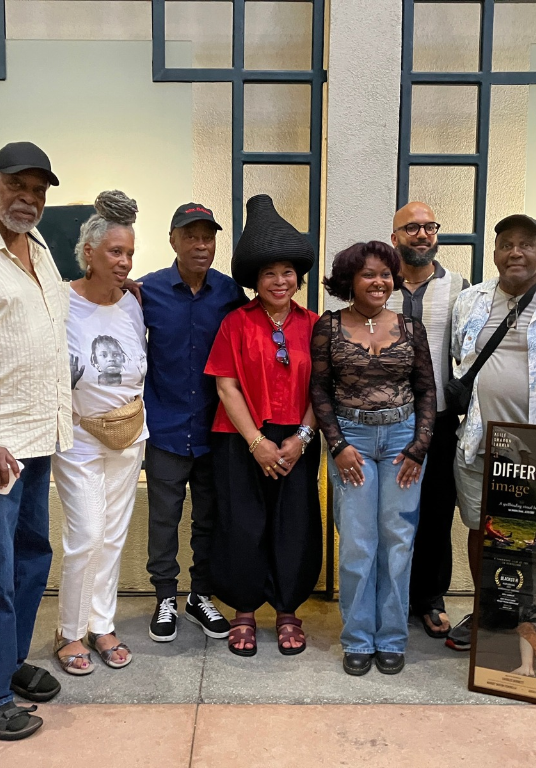
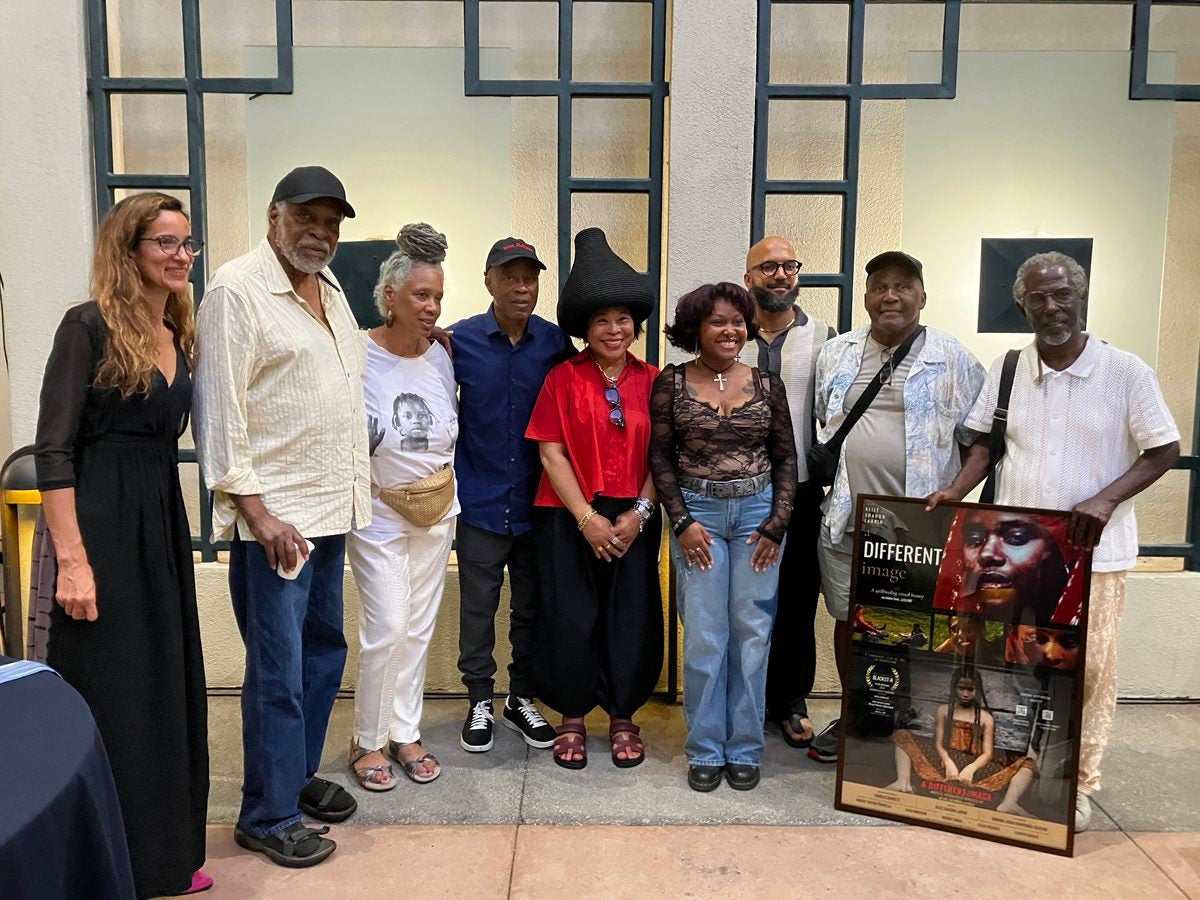
When I started the Black Film and Theater Initiative, the sole goal was to honor these filmmakers, the L.A. Rebellion. Talking to Dean Celine, one of the things I asked for was a plaque. I had not seen the posters of many of the Rebellion members on the walls, and they deserved to be honored. That brings us to today.
The L.A. Rebellion is an inspiration because filmmakers need representation. They need stories authentically told. Not just what you think “independent” cinema is. No. These filmmakers went beyond indie cinema. They were guerilla filmmakers. They would shoot on the street, they would shoot with their home Super 8 footage. They would shoot home, because that’s all they knew. The biggest advice I got as a filmmaker was film what you know. These filmmakers did that. They knew their families, their history, their cultural lessons. Stemming from Haile Gerima, of Africa to here with these prophetic filmmakers.
The biggest thing I’ll say, with this already winded speech, is that we need that now. We can’t rely on independent cinema that we think is independent, but is a front for other things. We need that home-grown cinema again. I’m seeing the ripples of the Rebellion in full effect, with the future of BFTI as an example. The L.A. Rebellion has inspired the new generation of filmmakers by showing them what’s possible. These new artists, they are taking their culture, their history, their families, their homes and telling their stories. I feel it in my work, in my peers’ projects. It’s a marvel to hold.
The L.A. Rebellion is reigniting. In fact, it’s never left because it’s a rebellion that sparks the world.
About Amber Payne:
Amber Payne is a writer, director, and multidisciplinary artist originally from Chicago, IL. Amber had a love for writing from a young age. Ranging from horror to romance to adventure, she soon began an interest in puppetry and animation. This interest evolved into a love for filmmaking. Coming from a close-knit family background, she developed an interest in her family’s roots in the Deep South. Their stories led to her passion for historical research and genealogy, which weaved its way into her artistry.
Amber graduated from the Chicago Academy for the Arts in 2022, where she specialized in the Media Arts department. She earned her Bachelor of Arts from the University of California, Los Angeles School of Theater, Film & Television in 2026.
An admirer of the occult and the horror genre, she writes southern and urban gothic character-led dramas. These stories center around mental illness, gender roles, racism, and classism from a Black femme perspective. Her two proof-of-concept short films Haima (2022) and Shadows on the Frontier (in development) exemplify these themes. The former is a recipient of the Finalist Laurel in the Boobs and Blood International Film Festival and Semi-Finalist Laurel in the Blow-Up Arthouse Film Festival – Chicago. Her work has also been showcased at the Music Box Theater in Chicago.
In addition to narrative fiction, she directs documentary and experimental works. This includes the short films “Wiwa Ile”, “Gods & Monsters” (recipient of the Media Arts Juried Awards Best Short Film and Sound Design (2021)), and “Harlem Renaissance: Black Excellence” (recipient of the Northern Illinois Regional Arts Exhibition Bronze Award (2021)). Her poem “Repetition” was published in Disquiet Arts Magazine in 2021.
When not making films, Amber writes poetry, paints, cooks, and photographs. She advocates for social justice, and strongly believes that art unifies the human experience. Amber is currently working as a freelance filmmaker, director, and writer based in Chicago and Los Angeles.