
by Linn Zheng, PhD student, Cinema & Media Studies
When reading about the rising popularity of microdramas in the States in summer 2025, I never expected that just one month later I would be able to learn about US-based microdrama practitioners’ experiences in person at my own institution, the School of Theater, Film, and Television (TFT) at UCLA. After all, as a former professional and a current academic working on a microdrama-focused research project, I have been deeply aware of how vertical microdramas are still viewed with skepticism in most parts of the world, despite their capacity to generate billions of dollars in revenue. Driven by curiosity, I attended the three UCLA TFT Picture Start events during the 2025-26 academic year, which substantially broadened the scope of the female-centered microdrama research I have been undertaking with my research collaborator Yuqi Yang (USC). This essay offers an overview of UCLA’s three Picture Start events in the 2025-26 academic year, tracing how they became a valuable channel for scholars and practitioners to communicate insights and visions about the microdrama industry, its gender representations, and production culture. The initiative also exposed an unresolved “us vs. them” framing around China in the microdrama industry. It raises the question of whether the revolutionary format can outgrow unequal gender systems and geopolitical binaries that are historically entrenched and oftentimes only artificial.
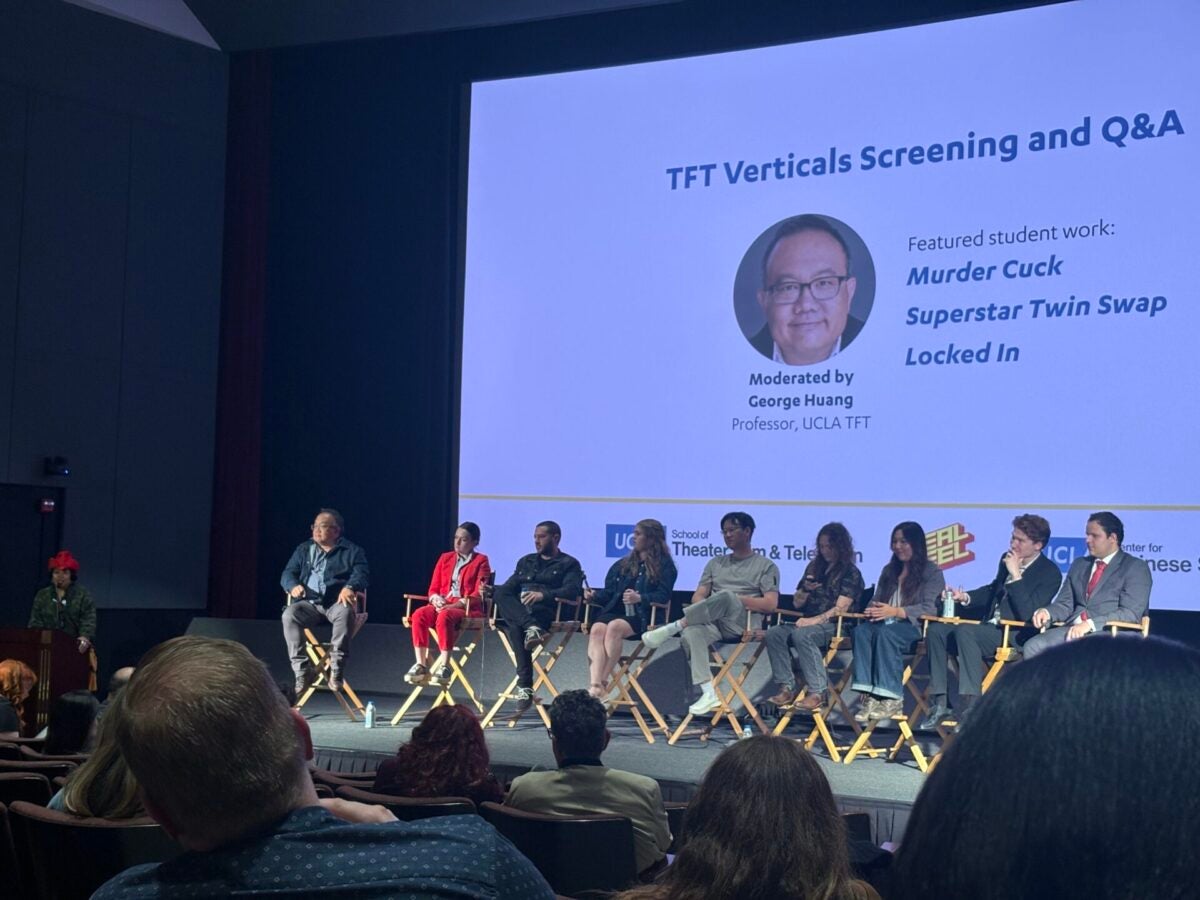
Picture Start is a decanal initiative spearheaded by Dean Celine Parreñas Shimizu of UCLA TFT. Drawing on collaborative synergies between TFT, UCLA’s Center for Chinese Studies, and industry partners like RealReel, the past academic year’s series, which took place on December 6, February 6, and May 29, consisted of panel conversations, Q&A forums, and workshops that brought together alumni, working professionals, and students across various roles and stages of their careers. It was advised by Prof. George Huang of Film, Prof. Dominic Taylor of Theater, and UCLA screenwriting alumnus DJ Azul, with Michael Berry of the Department of Asian Languages and Cultures convening one of the three panels. The series has become a model for inclusive, cross-industrial exchanges. Audience members ranged from American and international UCLA student groups, local professionals in film and television, migrant workers with microdrama experiences, scholars, and beyond.
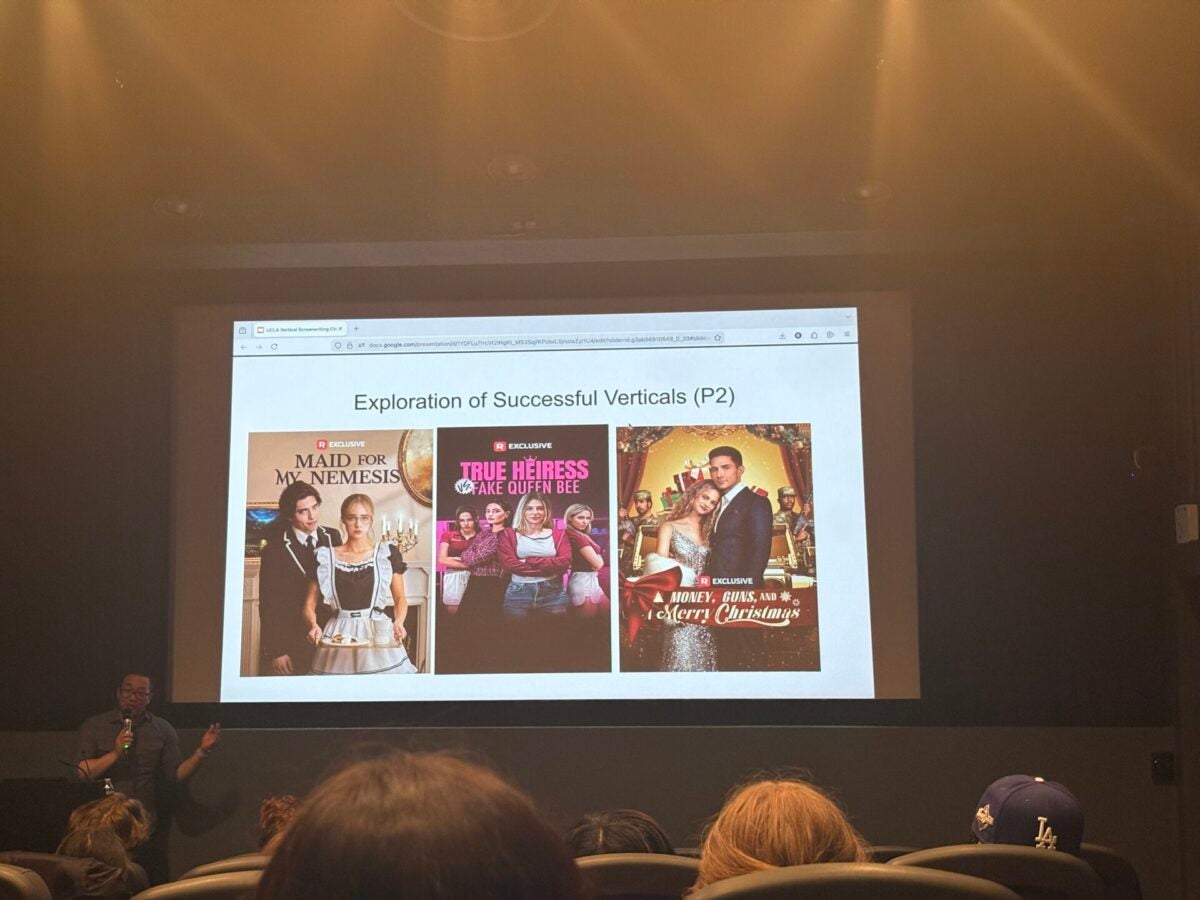
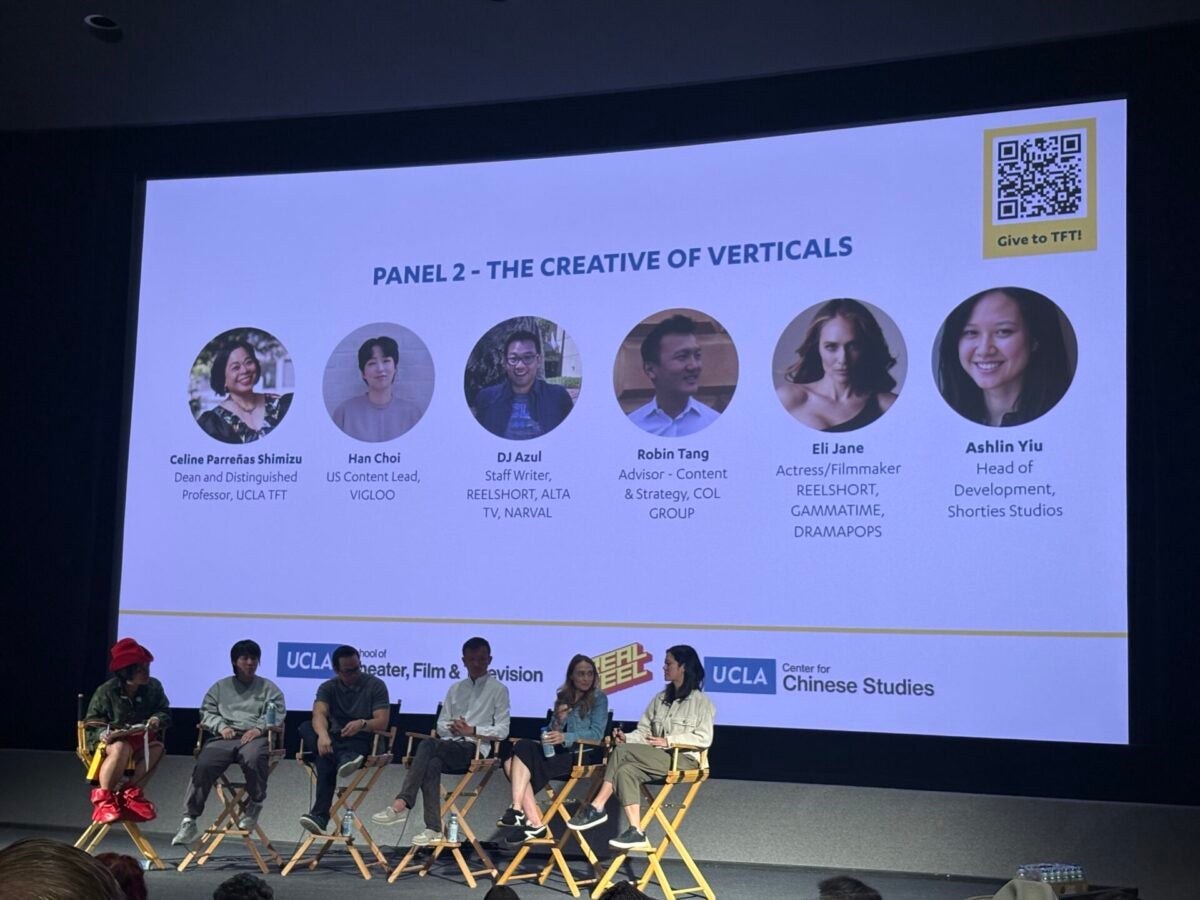
The question of creative freedom amid rapid technological developments emerged as a contested yet generative thread running through multiple dialogues. Both the audience and speakers showed a strong awareness of how vertical, highly compressed, and emotionally charged microdramas have revolutionized storytelling logic, posing a challenge to creators with conventional film or television training. Creativity is now profoundly entangled with algorithmic calculation, which then leads to detailed instructions on how to mobilize specific visual elements to hook in and retain viewers. Speakers also constantly shared major microdrama companies’ attitudes toward and attempts to implement generative AI. But while datafication and algorithmic control have become a common language in microdrama productions, Ashlin Yu (Shorties Studios) pointed out at the panel “The Creative of Verticals” that the interpretation of data could still be fairly subjective, meaning that human practitioners ought to recognize our lasting power in the creative process. Moreover, microdramas’ low-budget requirements have paved the way for a relative democratization, as another speaker at the February 6th “Vertical Short Industry” panel shared that small-scale independent productions were already underway in the U.S.
As a core goal of the first Picture Start Initiative, UCLA TFT’s students developed microdrama pilots, which were showcased at the final event in May. In contrast to conventional microdrama storylines that heavily rely on physical and verbal abuse of women characters to elicit strong emotional responses from the audience, narratives written and presented by the students avoided the controversial tropes. The critically minded student creators instead reinvented the genre by acutely capturing younger generations’ life realities and fantasies, with the aid of grounded imaginations and humor. Twin Swap, for example, was a majority women-led creative project that combined ordinary female students’ everyday stories with gripping tensions surrounding stardom and romance. Employing these lasting, popular themes through novel storytelling, Twin Swap’s pilots leave the audience questioning how concepts of aspirations and dream lives can be reinterpreted based on diverse social positions. Overall, the three student-produced microdrama pilot series demonstrated that fun, telling stories can be quickly materialized within microdrama’s lean, fast-paced production model, which does not necessarily need to conform to fixed gender paradigms.
The shifts toward democratization and criticality carry significant weight at the panels full of creators, most of whom have experienced persistent struggles within the rigidly stratified Hollywood system. Transnational, short-term microdrama productions offer unique opportunities for ordinary practitioners to work outside long-standing gendered and racialized hierarchies.
Several professionals mentioned that women make up an unusually large share of the workforce. In terms of viewership, middle-aged and senior Hispanic females are among the fastest-growing demographics—a phenomenon that has drawn massive industry attention to the desires of senior, minority women. Asian, and particularly Chinese, practitioners and companies were frequently cited as successful pioneers who built the industry’s structural foundation. Just like what Dean Celine Parreñas Shimizu reminded the audience during the final event, marginalized communities have always been active, vital participants in the popularization of new media technologies, cinema included.
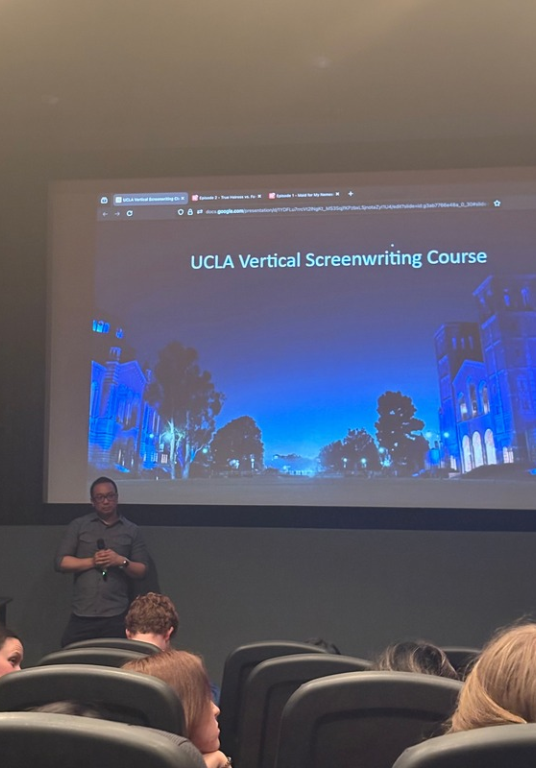
Yet such fluidity “naturally” breeds cultural and geopolitical anxiety. The most memorable moment for me happened at the Kickoff Workshop on December 6th, 2025, where screenwriter DJ Azul introduced the basic principles of storytelling in microdramas. To my surprise, an American audience member asked whether the current industrial context was a matter of “‘us’ trying to enter the Chinese market or ‘them’ trying to enter the U.S. market.” As an academically trained international student, I immediately sensed how politically charged the question was. At the subsequent two Picture Start events, I continued to notice that ReelShort and DramaBox—the two largest microdrama companies targeting non-Chinese markets—were referred to as “they.” Who exactly is this “they”? What about “us”? Where does the juxtaposition come from? How do such pronouns position hundreds of Chinese-born microdrama practitioners who have been making enormous contributions to Americanized and even globalized productions? I found myself reflecting on how these dynamic dialogues on microdrama production had transformed into another form of critical inquiry. The conversations at Picture Start inspired me to conduct further research on media rhetoric surrounding microdramas’ “Chineseness” label, which later became the basis for my presentation at the 2026 Society for Cinema and Media Studies (SCMS) Annual Conference.
When the 2025-26 Picture Start wrapped up on May 29th at TFT’s James Bridges Theater, Eli Jane, a prolific female microdrama actor, spoke candidly about her work experiences across different cultures and environments. She revealed that being a mother made her highly cautious about the potential violence caused by excessive on-screen female nudity. In her opinion, it is because microdramas were invented in China, where regulations prohibit full nudity in mainstream film and television, that female actors in this now globalized industry are inadvertently protected from the exploitative on-screen demands that have long been normalized outside China and particularly in the West. Her comment struck me as a brilliant, unexpected inversion: while many Chinese audiences viewed microdramas’ intense sensuality as a liberation, coming from a transcultural perspective, Eli reframed it rather as a form of workplace protection. Offering a new angle to rethink censorship, Eli’s observation points to the significant critical value of the lived experience of a working professional and mother. It complicates the controversy over microdramas’ “Chineseness” even further, by not simply treating the latter as a matter of national origin, cultural anxiety or antagonizing economic competition, but as something negotiated and re-understood through the everyday processes of production and consumption.
To me, what the Picture Start events highlighted over the past year was precisely a need to acknowledge and live with instability. Why should microdramas need to settle on a single national identification? With new technologies and growing audience interests, can this format evolve in more diverse directions than the traditional melodrama genre? Will the industry continue to embrace its current practitioners’ diverse demographics? These are some of the burning questions I keep in mind following my attendance at Picture Start. And of course, as many speakers have brought up, instability also connotes precarity, especially in an age when generative AI has sparked discussions about labor rights and transnational copyright controversies. The future of vertical microdrama storytelling isn’t automatically heading toward a clean, triumphant narrative. Instead, it’s a battlefield where underprivileged and stigmatized practitioners and audience members must actively fight for their place at the table.